How to Set Goals for Mental Wellness
Setting goals for mental wellness is crucial for overall well-being and personal growth. By establishing specific, measurable, achievable, relevant, and time-bound (SMART) goals, individuals can effectively track their progress and stay motivated. Here are some examples of SMART goals for mental wellness:
Examples of SMART Goals for Mental Wellness:
- Specific: Meditate for 10 minutes every morning to reduce stress and improve mental clarity.
- Measurable: Keep a daily journal to track mood changes and identify triggers for anxiety.
- Achievable: Attend therapy sessions once a week to work on coping strategies for managing depression.
- Relevant: Practice deep breathing exercises before bedtime to improve sleep quality and reduce insomnia symptoms.
- Time-bound: Complete a mindfulness course within the next 3 months to enhance mindfulness skills and reduce negative thought patterns.
It is essential to set realistic goals when it comes to mental health. Unrealistic or overly ambitious goals can lead to feelings of failure and frustration, ultimately impacting mental well-being negatively. By setting achievable goals, individuals can experience a sense of accomplishment, boost self-esteem, and maintain motivation to continue working towards their objectives.
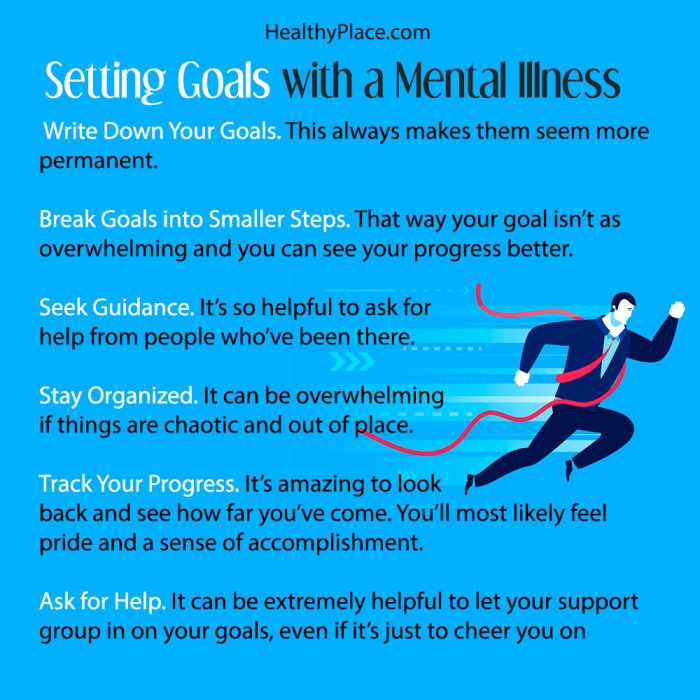
Breaking down larger mental wellness goals into smaller, manageable steps is a practical approach to prevent feeling overwhelmed and increase the likelihood of success. By dividing a big goal, such as improving overall mental health, into smaller tasks or milestones, individuals can focus on making gradual progress and celebrate achievements along the way. This method can also help in maintaining consistency and building momentum towards long-term mental wellness goals.
Mental Wellness
How to set goals for mental wellness – When we talk about mental wellness, we are referring to a state where individuals are able to cope with stress, work productively, build positive relationships, and make meaningful contributions to their communities. It encompasses emotional, psychological, and social well-being and is crucial for overall health.
Strategies for Maintaining Good Mental Health
There are several strategies that can help individuals maintain good mental health on a daily basis:
- Practice self-care activities such as exercise, meditation, or hobbies that bring joy.
- Establish a routine and prioritize sleep to ensure adequate rest.
- Connect with others and build a support system to share experiences and emotions.
- Avoid negative influences and set boundaries to protect your mental well-being.
Relationship Between Mental Wellness and Emotional Intelligence
Emotional intelligence plays a significant role in mental wellness as it involves the ability to recognize, understand, and manage our emotions effectively. Individuals with high emotional intelligence are better equipped to handle stress, communicate assertively, and maintain healthy relationships, ultimately contributing to their overall mental well-being.
Physical Fitness
Regular physical exercise plays a crucial role in maintaining both physical and mental well-being. The connection between physical fitness and mental health is well-documented, with exercise being linked to improved mood, reduced stress levels, and enhanced cognitive function.
Examples of Physical Exercises
- Cardiovascular exercises such as running, cycling, or swimming can help release endorphins, which are known as ‘feel-good’ hormones that can boost mood and reduce symptoms of anxiety and depression.
- Strength training exercises like weightlifting or bodyweight exercises can improve self-esteem and confidence, leading to a more positive outlook on life.
- Yoga and Pilates are excellent forms of exercise that focus on mindfulness, breathing techniques, and relaxation, all of which can help reduce stress and anxiety levels.
- Dance classes or group fitness activities can provide social interaction, a sense of community, and a fun way to stay active, which can contribute to overall mental well-being.
Benefits of Regular Physical Activity
Regular physical activity can help reduce stress and anxiety levels by:
- Releasing endorphins that act as natural painkillers and mood elevators.
- Improving sleep quality, which is essential for overall mental health and well-being.
- Increasing self-confidence and self-esteem, leading to a more positive self-image.
- Providing a healthy coping mechanism for dealing with life’s challenges and stressors.
Healthy Eating
Maintaining a healthy diet is crucial for supporting mental wellness. The food we eat plays a significant role in our brain function and overall well-being.
Incorporating Brain-Boosting Foods
- Include foods rich in omega-3 fatty acids, such as salmon, walnuts, and chia seeds, to support brain health and reduce inflammation.
- Consuming antioxidant-rich foods like blueberries, dark chocolate, and spinach can help protect the brain from oxidative stress.
- Incorporate whole grains, such as brown rice and quinoa, to provide a steady supply of energy to the brain.
Gut Health and Mental Well-Being
The gut-brain connection is a vital link between our digestive system and mental health. A healthy gut microbiome can positively impact mood, cognition, and overall mental well-being.
Research suggests that gut bacteria produce neurotransmitters like serotonin, which play a key role in regulating mood.
To support gut health, include probiotic-rich foods like yogurt, kefir, and sauerkraut in your diet. Fiber-rich foods such as beans, lentils, and whole grains also promote a healthy gut environment.
Preventive Care
Preventive care plays a crucial role in maintaining good mental health by focusing on early intervention and proactive measures to prevent mental health issues from escalating. By taking preventive actions, individuals can create a foundation of well-being and resilience to cope with life’s challenges.
Importance of Preventive Care
- Regular exercise: Engaging in physical activity can help reduce stress, anxiety, and depression, promoting overall mental well-being.
- Healthy eating habits: Consuming a balanced diet rich in nutrients can support brain function and mood regulation.
- Stress management techniques: Practicing relaxation techniques such as mindfulness, deep breathing, or yoga can help alleviate stress and improve mental clarity.
- Social connections: Building and maintaining supportive relationships can provide a sense of belonging and emotional support, reducing feelings of isolation and loneliness.
Role of Regular Check-ups
Regular check-ups with healthcare providers can play a crucial role in preventing mental health issues by identifying early warning signs and providing necessary interventions. These check-ups can include mental health screenings, discussions about stressors or triggers, and the development of personalized wellness plans to address any emerging concerns.
Balanced Diet
Maintaining a balanced diet is crucial for overall well-being, including mental health. The food we consume plays a significant role in our mood, energy levels, cognitive function, and emotional stability.
Guidelines for Creating a Well-Rounded Meal Plan
Creating a meal plan that supports mental health involves incorporating a variety of nutrient-rich foods. Here are some guidelines to help you create a balanced diet:
- Include a variety of fruits and vegetables in your daily meals to provide essential vitamins, minerals, and antioxidants.
- Incorporate whole grains like quinoa, brown rice, and oats for sustained energy and fiber.
- Include lean proteins such as poultry, fish, beans, and nuts to support brain function and mood regulation.
- Choose healthy fats like avocados, olive oil, and nuts to support brain health and reduce inflammation.
- Limit processed foods, sugary drinks, and excessive caffeine intake, as they can negatively impact mental health.
- Stay hydrated by drinking an adequate amount of water throughout the day to support cognitive function and overall well-being.
Effects of Nutritional Deficiencies on Mental Well-Being
Nutritional deficiencies can have a profound impact on mental health. Lack of essential nutrients can lead to mood swings, fatigue, cognitive impairments, and even mental health disorders. Here are some common deficiencies and their effects on mental well-being:
- Vitamin D: Deficiency in Vitamin D has been linked to depression and seasonal affective disorder.
- B Vitamins: Inadequate intake of B vitamins can lead to symptoms of anxiety, depression, and cognitive decline.
- Omega-3 Fatty Acids: Low levels of omega-3 fatty acids have been associated with mood disorders and cognitive impairments.
- Magnesium: Magnesium deficiency can contribute to symptoms of anxiety, irritability, and insomnia.
- Zinc: Zinc deficiency has been linked to symptoms of depression and impaired cognitive function.
Regular Exercise: How To Set Goals For Mental Wellness
Regular exercise plays a crucial role in improving mental health by releasing endorphins, reducing stress, and enhancing overall mood. It is an essential component of a holistic approach to mental wellness.
Relationship Between Physical Activity and Mood Regulation
Regular physical activity has been linked to the regulation of mood and emotions. When you exercise, your body releases endorphins, which are chemicals that act as natural painkillers and mood elevators. This can help reduce feelings of stress, anxiety, and depression. Additionally, exercise can improve sleep quality, boost self-esteem, and increase overall energy levels, leading to a more positive outlook on life.
- Endorphins released during exercise act as natural mood enhancers.
- Regular physical activity can reduce symptoms of anxiety and depression.
- Improved sleep quality and increased energy levels contribute to better mental well-being.
Recommended Frequency and Duration of Exercise for Mental Wellness
The recommended frequency for exercise to improve mental wellness is at least 150 minutes of moderate-intensity aerobic activity per week, or 75 minutes of vigorous-intensity activity. It is also beneficial to include strength training exercises at least two days a week to enhance muscle strength and endurance.
It is important to find activities that you enjoy and can incorporate into your routine to make exercise a sustainable habit for mental well-being.
Mental Health
Mental health refers to our emotional, psychological, and social well-being. It affects how we think, feel, and act. It also helps determine how we handle stress, relate to others, and make choices. Mental health is important at every stage of life, from childhood and adolescence through adulthood.
Importance of Seeking Professional Help
When dealing with mental health issues, it is crucial to seek professional help. Mental health professionals, such as therapists, psychologists, and psychiatrists, are trained to provide support and guidance in managing and overcoming mental health challenges. They can offer therapy, medication, and other interventions tailored to individual needs.
Stigma Surrounding Mental Health
Despite progress in raising awareness about mental health, there is still a stigma surrounding it. This stigma can lead to discrimination, shame, and reluctance to seek help. To combat stigma, it is important to educate others about mental health, speak openly about our experiences, and promote acceptance and understanding. By challenging stereotypes and misconceptions, we can create a more supportive and inclusive environment for those struggling with mental health issues.
Holistic Wellness
In the realm of mental health, holistic wellness plays a crucial role in promoting overall well-being by addressing the interconnectedness of physical, emotional, and mental health.
Integration of Physical, Emotional, and Mental Well-being
- Physical well-being: Regular exercise, adequate sleep, and balanced nutrition are essential for supporting mental health.
- Emotional well-being: Practices like mindfulness, journaling, and therapy can help manage emotions and reduce stress levels.
- Mental well-being: Engaging in activities that stimulate the mind, such as learning new skills or hobbies, can enhance mental wellness.
Examples of Holistic Practices, How to set goals for mental wellness
- Yoga and meditation: These practices not only improve physical flexibility but also promote relaxation and mental clarity.
- Art therapy: Engaging in creative activities can be therapeutic and help individuals express emotions in a non-verbal way.
- Nature walks: Spending time in nature has been shown to reduce stress, improve mood, and enhance mental well-being.
Chronic Diseases
Chronic diseases can have a significant impact on mental health, creating a complex relationship between physical and mental well-being. The stress, pain, and limitations that come with managing chronic illnesses can take a toll on a person’s mental wellness.
Managing Mental Well-being with Chronic Illnesses
- Practice mindfulness and relaxation techniques to reduce stress and anxiety levels.
- Seek support from therapists, counselors, or support groups to address emotional challenges.
- Maintain open communication with healthcare providers to ensure holistic care for both physical and mental health.
- Engage in activities that bring joy and fulfillment to counteract the negative impact of chronic diseases.
Impact on Quality of Life and Mental Wellness
- Chronic diseases can lead to feelings of isolation, depression, and hopelessness.
- Managing symptoms and treatment regimens can be mentally exhausting, affecting overall well-being.
- The uncertainty of living with a chronic illness can cause anxiety and fear about the future.
- Quality of life may be compromised due to limitations imposed by the illness, impacting mental health.
Immunity Boosters
Having a strong immune system is crucial for overall health, including mental well-being. The immune system plays a vital role in protecting the body from infections and illnesses, which can impact our mental health and well-being.
Immunity-Boosting Foods and Habits
Supporting your immune system with the right foods and habits can also benefit your mental health. Here are some examples of immunity-boosting foods and habits:
- Eating a variety of fruits and vegetables rich in vitamins and antioxidants.
- Including probiotics in your diet to support gut health, which is linked to immune function.
- Consuming foods high in omega-3 fatty acids, like salmon and walnuts, to reduce inflammation and support immune response.
- Drinking plenty of water to stay hydrated and support overall immune function.
- Getting regular exercise to boost circulation and immune cell activity.
Stress Management and Immune Function
Stress can have a negative impact on both immune function and mental wellness. Managing stress effectively is key to enhancing immune function and supporting mental health. Some strategies to manage stress include:
- Practicing relaxation techniques such as deep breathing, meditation, or yoga.
- Engaging in physical activity to reduce stress hormones and boost mood.
- Maintaining a healthy work-life balance to prevent burnout and chronic stress.
- Seeking support from friends, family, or a mental health professional to cope with stressors.
FAQ Corner
How do I ensure my mental wellness goals are realistic?
To ensure your mental wellness goals are realistic, start by setting small, achievable milestones that align with your overall well-being objectives. It’s important to track your progress and make adjustments as needed.
What are some examples of SMART goals for mental wellness?
Examples of SMART goals for mental wellness include meditating for 10 minutes daily to reduce stress, exercising three times a week for improved mental clarity, and journaling each night to enhance self-reflection.
How can I break down larger mental wellness goals into manageable steps?
To break down larger mental wellness goals, start by identifying the main objective, then divide it into smaller tasks or actions. Focus on one step at a time, prioritize tasks, and celebrate each accomplishment along the way.


More Stories